By: Ozren Podnar |
Monsanto returning to Croatia? |
|


 After the recent defeat, Monsanto, the world's leading producer of genetically modified seeds and herbicides, has rekindled its expansion plans in Croatia.
This is evident from the recent ads on the MojPosao web site, which advertises new jobs in Croatia, where Monsanto is seeking sales representative for Croatia.
The infamous U.S. corporation seeks to hire a university-trained agronomist with experience in the agricultural industry and trade.
Among the tasks of the future Monsanto representative is promoting the company's products on the Croatian market.
Company dangerous for mankind
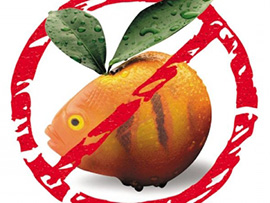
Many in the world believe this company to be dangerous to humanity because of changing the genetic code of plants to increase its resistance to disease, yields and, of course, revenue.
Such interventions in nature are extremely dangerous to human health and the environment.
However, despite numerous studies that have pointed to harmful effects of Monsanto products, governing authorities are very inclined to this phenomenally rich company and often act in its favor by passing favorable legal provisions.
On the other hand, this year has seen a creation of a broad international movement against Monsanto, which included two planetary protest marches in which Croatian citizens took part.
The first march was organized on March 25 in 436 cities in 52 countries.
In Croatia, the marches were held in Zagreb, Split, Zadar, Rijeka, Osijek, Bjelovar and Đakovo.
Another march was organized on October 12, when massive protests were held in 400 cities in 57 countries, including the Croatian cities of Zagreb and Split.
The date of this protest was timed to coincide with the October 16, World Food Day.
Among the requirements placed before the governments was the mandatory labeling of products containing GMOs, because currently in many countries such information is not disclosed on product labels.
The United States prohibited special indication of foods containing GMOs, as it would – as the lawmakers claimed – lead consumers to think that "there is something wrong with that food."
This legal ban on placing GMO warnings on product labels in the United States encouraged people to take action, which resulted in marches against Monsanto.
Biased government
Activists from the Greenpeace organization, Organic Consumers Association and The Non-GMO Project, have stated that the dangers of genetically modified foods have not been adequately studied and identified.
Also, they have warned that state regulators are not objective enough to make judgments about the effects of GMOs on the environment, nature and health.
Monsanto and related companies use their vast financial resources to suppress the accusations regarding the harmfulness of their products, but activists persist in their claims.
That is why an activist, writer and director Jeffrey M. Smith published two books that describe the risks of genetically modified foods.
"Thousands of doctors recommend GMO-free diet to people who are recovering from stomach problems, weakened immunity, organ damage and other diseases," - Smith said in a recent interview.
"When the American Academy of Environmental Medicine studied the research on animals fed with GMO, they concluded that laboratory rats suffered the aforementioned problems. And these disturbances are on the rise in the U.S. since GMO products were introduced."
The list of harmful effects of GMOs includes an increased risk of cancer and hormonal disorders that cause infertility in women.
Hazardous herbicides and insecticides
For the cultivation of GMO crops, special herbicides and pesticides are used, such as Roundup herbicide and Bt toxin insecticide.
Roundup herbicide is applied to the crops, which absorb and retain. "Roundup is present in the food we eat," - says Smith.
"A recent survey linked Roundup with obesity, diabetes, cancer, heart disease, multiple sclerosis, anorexia nervosa, autism, depression, Parkinson's and Alzheimer's disease.
This happens because the compound killing intestinal bacteria disrupts metabolic and digestive tract, and can cause leaky gut syndrome."
Regarding corn and cotton, a gene from the bacterium that produces the Bt toxin was introduced in their genetic pool.
This material creates holes in the stomachs of insects and kills them. Smith says that the study conducted in 2012 showed that Bt toxin enters the human bloodstream and damages the cells of our bodies.
Plants to overturn nature
Smith challenged the claims of Monsanto and similar companies that products with GMO are necessary to feed a growing world population, since they increase the yield.
"Average GMOs reduces yields, as shown by the research conducted by the Union of Concerned Scientists.
GMO has nothing to offer in terms of combating famine and eradication of poverty. On the other hand, sustainable agriculture increases yields, as shown in studies that included millions of farms."
Monsanto and related companies plan to "overturn the nature, eliminate products created after one billion years of evolution and replace them with designed genes and organisms in order to increase profits."
Croatia's hard stance on GMOs
News of Monsanto coming back to Croatia was commented by Croatian molecular biologist, Dr. Hrvoje Fulgosi.
"Croatian Law on GMOs is one of the most restrictive in Europe. According to this law, all products in stores that contain GM ingredients in a proportion larger than 0.9 percent must be clearly labeled as GMO, "he said in an interview for Jutarnji list, Croatian daily newspapers.
According to Dr. Fulgosi, Croatia has not approved the cultivation of any GMO crop, not even in a limited area, while for every release of genetically modified organisms into the environment it is mandatory to seek the approval of several Croatian authorities.
"The documentation to apply for deliberate release of GMOs into the environment is extremely complex and requires considerable effort by professionals to be properly filled in," said Dr. Fulgosi.
So it seems there is no reason for concern. Or is there?
Liked the article?
Share it with your friends!