

By: Sandra Petra Pintarić |
Yoga twists - unlock your longevity and softness of your spine |
|


 Inactivity and improper posture can seriously reduce the range of motion of the spine, weaken the muscles that support it, and press the vertebrae and discs.
They block the main stream of oxygen, blood and prana (vital life energy) and nerve currents passing through the spine.
Yoga twists can help you against that.
Yoga positions that twist your body in one direction (the twists) are highly respected positions for achieving spinal health and elasticity.
Some of them belong to the "fountain of youth" - those that rejuvenate the mind and body.
Yoga twists come in all variations, including standing, sitting, lying down and inversion.
They all share careful and gradual getting in and out of positions, a distinctive use of breath and attention, and they also share a number of common benefits.
Various positions are used for beginning a yoga session as a warm-up; while others are used for balancing after intensive forward and backward bending.
They are often used at the end of yoga sessions as a form of deep relaxation to free any tension arising during the session.
The benefits of yoga twists
Twists gently move the spine and thus relieve vertebrae and disks helping them perform better while straightening the spine.
They promote a better flow of blood and oxygen; they especially relieve tension from the middle part of the spine. They affect all the nerves that stretch from the spine to other parts of the body.
They move the ribs and strengthen the chest muscles, which favours the full potential of breathing.
They have a very beneficial effect on the internal organs, bowels and digestion. Furthermore, they encourage a better performance of digestive fire so organs such as liver, spleen, gallbladder, stomach, kidneys and pancreas will benefit from these positions.
They help massage these organs naturally, ensure better detoxification of the body, reduce bloating and digestive discomfort.
They are excellent in eliminating deep tension within the body and raise the energy levels when we feel tired and need to relieve emotional stress.
Famous twists
Parivrtta Trikonasana: the position of a reversed triangle helps eliminate stress and find inner balance and peace, developing a sense of coordination, balance and endurance and bringing suppleness and strength.
Trikonasana has a therapeutic effect against anxiety and physically stretching the entire body, stimulates internal organs and digestion and promotes better blood flow to the head.
Parivrtta-parshvakonasana: the position of an inverted side stretching gives elasticity to the spine and the hip joints. It stretches your legs, opens the chest and shoulders and strengthens concentration and endurance. Video
Ardha Matsyendrasana: the Lord of the Fish position is beneficial for the overall nervous system and the internal organs. It increases the blood flow to the vertebrae and has a beneficial effect on the whole body.
It stretches the shoulders, hips and neck and elongates the spine. It has a therapeutic effect on asthma, boosts energy levels during times of fatigue, relieves menstrual pain, sciatica and back pain. Video
Bharadvajasana: the position of a wise man Bharadvaja puts the spine in a strong rotation, whereby the flexibility and other benefits are offered to the whole body, since everything is connected to the spine.
It improves neck posture, has a therapeutic effect on carpal tunnel syndrome and relieves stress. Video
Dharmasana: it opens up the hips, stretches the lumbar muscles (psoas) that connect the pelvis to the spine, helps relieve sciatica and low back pain, massages the internal organs and stretches your neck muscles.
Makarasana: crocodile extension is one of the most enjoyable, relaxing positions on the back. It releases tension and blockage from the shoulders and hips while stretching the sides of the body.
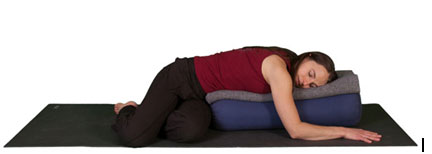
Restorative Yoga: the position that brings deep relaxation and release of tension. While you are resting on pillows or blankets, the body is powered with your breath, slowly releasing the tension from the pelvis and hips, and stimulating a gentle massage of the internal organs.
In all “twist” positions you need to be aware of the elongation of the spine from the base body and of the complete rotation of the spine, starting from the root, from which you need to achieve a maximum extension, then the stretching and the rotation of the middle of the spine and finally of the upper part of the cervical spine.
Enter and leave each position slowly and carefully. While you are in them, keep your focus and breathe through the solar plexus or the spine. This will encourage a better flow of oxygen, blood and prana through those body parts.
The solar plexus area is also called our second brain, through which we receive the energy of other people into our lives and all the physical movements of the body start from that center.
Twists are particularly active in the area of the third energy center chakra called "Manipur". The main features of this chakra are power and expansion.
If functioning properly, it develops the will and enthusiasm, bringing strength, spiritual wisdom and righteousness.
If you are often angry, tense or without joy, if you feel blockage etc., the twists are excellent positions for bringing back the good energy and relieving the mind of various forms of stress.

Liked the article?
Share it with your friends!


