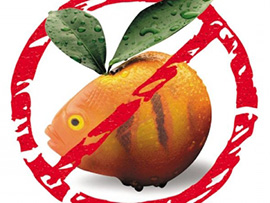
Big Island said "NO" to GMO technology |
|


 Good news has come from beautiful Hawaii, which have for years been known as a center for the development and testing of GMO products.
Billy Kenoi, the mayor of the largest islands of Hawaii - Big Island, on December 5th 2013 signed a law that prohibits biotech companies working on the Big Island.
Farmers on the island are now prohibited from doing any form of cultivation, which includes genetically modified crops.
Just a few weeks before that, on the island of Kauai, a law that regulates the use of pesticides and GMOs was passed.
Kauai responded with these measures after a year-long complaints by the population about the dangers of biotechnology testing on the environment and human health.
Similar legislation is expected soon on Maui, the second largest island of Hawaii.
With this law Big Island denied privileges to biotech giants Monsanto, Dow, BASF, Syngenta and Pioneer, which are present on the Hawaiian Islands.
"We must preserve our country"
Both Kauai and Big Island received strong support from the local population and national groups that oppose the cultivation of GMOs.
Mayor Billy Keno said the following when he adopted the law:
"Our community has a deep connection with our country. We all realize that we need to protect our island and preserve our precious natural resources."
Hawaiian agricultural industry is divided on the issue of the new law.
Some groups such as the Hawaii Farmers Union and the United Kona Coffee Farmers Association support the new law and vigorously oppose GMO cultivation.
They highlight the problem of contamination of natural fields with GMO seeds that are spread by wind, thus contaminating the surrounding fields.
Some small farmers protest and worry how the new law will affect them.
Small farmers do not cultivate GMO crops but fear that this law could deny them access to new modern technologies.
For example, they mentioned drought resistant grass, because the new law will limit their efforts to maintain animal husbandry despite drought, which is a constant problem on the island.
Divided attitudes related to this bill sparked controversy and tension in the agricultural sector, but Keno called people to calm the tensions, as he strongly believes in the validity of this law.
Forced genes combining
GMOs, or "genetically modified organisms," are plants or animals whose genetic material or DNA was modified in an unnatural way through genetic engineering techniques.
In other words, GMOs represent forced combination of genes or altering the DNA of organisms, which is absolutely unacceptable and can present a great danger to man.
GM products have been proven to have harmful effects on health. There is a growing evidence linking GMOs to many health problems and environmental damage.
Thus, many studies have linked the consumption of GM products with the appearance of tumors, congenital deformities, infertility and many other health problems.
The most developed countries in the world consider GMOs as unsafe and harmful.
In more than 60 countries, including Australia, Japan and some countries in the European Union, there are bans to the production and sale of genetically modified products.

Liked the article?
Share it with your friends!