

By: Ozren Podnar |
Millions of protesters march against Monsanto |
|


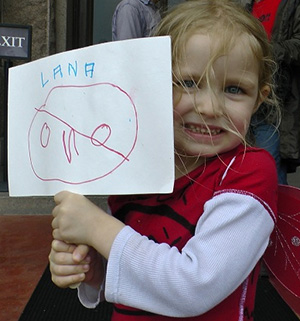 Millions of people worldwide were protesting against the giant U.S. corporation Monsanto, the largest producer of genetically modified seeds and pesticides.
Protest marches against Monsanto gathered masses in 436 cities in 52 countries, including Croatia.
In our country, marches were organized in Zagreb, Split, Zadar, Rijeka, Osijek, Bjelovar and Đakovo.
The purpose of the protest was to raise public awareness of potential hazards which genetically modified organisms (GMOs) entail.
With slogans such as "Real Food 4 Real People", the protesters wanted to warn the people in power to cease to be kindly to producers of GM seeds and food.
In the United States, the movement had an additional note, related to the recently passed law that protects Monsanto and similar companies from legal prosecution.
Millennium-long tradition discontinued
List of sins of GMOs producers and their sympathetic potentate is lengthy.
For example, legislators allow Monsanto to re-charge the seed that the customer has already paid for when the seeds were purchased.
Relying on patent rights, Monsanto charged farmers for planting seeds that they have saved from the previous harvest.
This practice has angered millions of farmers around the world, because it is contrary to the thousand-year tradition of saving and reusing multiplied seeds.
Last year, a Brazilian court ruled in favor of five million local farmers wanted Monsanto to reimburse them all the money they paid for patent fees.
But, the powerful company has appealed and the final outcome of the dispute is still uncertain.
Suspicious genetic "enhancement"
Genetically modified plants are grown from seeds that have been genetically "enhanced" so that they produce higher yield, have better taste and are more resistant to pests and diseases.
The United States were the first to yield to GM food and most of its corn and soybean crops today are genetically modified.
As a result, countless food items now contain GM ingredients.
Corporations like Monsanto are rebelling against the labeling of GM products, with the justification that the label will suggest to consumers that "there is something wrong with GM food."
Regarding the allegations of adverse health consequences, such manufacturers defend themselves by saying that there would have been a lot of casualties by now if the GM food was harmful.
In their defense, they use decisions made by official state institutions such as the U.S. Food and Drug Agency (FDA).
Silence of the mainstream media
Since these corporations have unlimited financial resources, the fight against GMOs requires coordinated and continued engagement of millions of consumers, as well as the assistance of independent media.
Because, as noted by the organizers of the march in many cities involved in the protest, the mainstream media were mostly - absent from these events.
It is easy to see why: media policy is largely determined by advertisers, i.e. companies with lots of money.
Even worse, the decision of a certain company to cease conducting business with a certain “disobedient” media can lead to bankruptcy of that media.
The protest goes on
March against Monsanto was initiated by the American called Tami Canal on 28th of February when she called all opponents of GMOs to stand up against that corporation and other producers of GM seeds.
"I felt the power and inspiration by seeing so many people from so many different walks of life that have put their differences aside and worked together," commented Tami Canal.
"We will continue until Monsanto agrees to the demands of consumers. They are poisoning our children and our planet. If we do not act against them, who will?"

Liked the article?
Share it with your friends!


