

Autor: Ivana Dragica |
How to make a vertical garden in 7 steps |
|


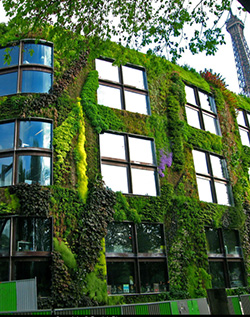
Vertical gardening is a strange way of gardening because, as the word itself indicates, the plants grow vertically without soil or in small quantities of soil.
But, this is a natural process, because in nature there are plants that grow in habitats without soil.
It is believed that the founder of this method is the French botanist Patrick Blanc, who found the inspiration during his travel to Thailand, seeing how plants grew on all kinds of surfaces.
Vertical gardening is ideal for smaller spaces, which will be environmentally and aesthetically refreshed.
It also contributes to energy efficiency due to a cooling effect in summer and an improved air quality.
The height of the vertical garden can range from huge (the walls of highrises) to very small (inside the apartment).
If desired, the entire wall of your house can be turned into a vertical garden.
How to plant a vertical garden
If you do not have a large horizontal surface and you want to make your space healthier, closer to nature and also more modern, a vertical garden is the right solution.
Yet, understanding the necessary conditions for such gardening is essential for its success.
Step 1: Choose an area
To start, select a vertical surface where you want to plant your garden - for example, the outer wall of the house.
Plant choice will depend on the position of the wall and the amount of light it receives.
If you want to grow certain types of plants, select a place that will suit them best
Step 2: Create a framework
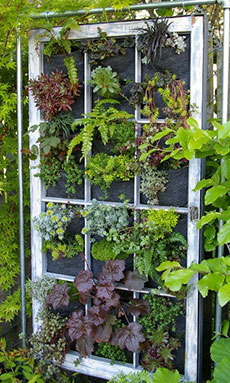
You need to develop a framework for your plants which resembles an office shelf. The easiest material to maintain is plastic.
However, it can also be made of metal, which is more expensive and heavier, or of wood, which requires additional protection against moisture and mold.
Place quality soil in the frame, and then cover it with a solid fabric that will hold the plants and the ground inside.
You will need at least two layers of fabric, connect them with zinced screws and stainless steel fittings, tighten them well in order to remove all wrinkles.
If making a frame is too complicated for you, you can buy ready-made frames for vertical gardens: [url=http://flowall.hr/]http://flowall.hr/[/url]
Step 3: Prepare the irrigation system
To successfully grow plants on a vertical surface, they need irrigation system that they can supply the moisture evenly.
You can buy irrigation systems designed specifically for vertical gardens, or if you feel capable, you can make your own "drop by drop" irrigation system using tubes.
The system has to operate automatically as the vertical gardens dry quickly, so it is necessary to irrigate the plants several times a day.
Determine the optimal amount of water for your plants in order to avoid leaking on your walls, and to ensure that the soil is sufficiently moisturized.
Step 4: Select the fertilization system
To evenly fertilize green area, you need a fertilizer injector that can be connected to the irrigation system.
Once you are finished with fertilization, connect irrigation system back to the water source.
Keep in mind that water may sometimes leak from your vertical garden, so it would be good to place flower pots under it.
Step 5: Choose plants
When selecting plants, observe the sun, shade, humidity, wind and cold during the winter.
If you planning to leave the garden outside during the winter, it is best to use plants that grow in colder climates than the one in which you live.
If you have a movable wall, in winter it can be kept in a cool, dry place, while the plants are dormant.
Plant native plants. You can use bushy plants, flowers, vegetables, fruits etc.
This is where Patrick Blanc applied his knowledge of botany. For example, for vertical gardens in Central Europe he combines a mix of evergreen ferns, mosses, grasses and low shrub species.
Step 6: Plant the plants
In order to plant your plants, make a hole in the fabric through which you will plant the plants.
Try to place as much soil as possible around the root.
Click here to see how making a frame and planting the plants looks like.
Step 7: Design!
The most entertaining part of vertical gardening is creating green composition.
A proper selection is essential for the aesthetic appearance and the life cycle of plants, their development and maintenance.
Benefits of vertical gardens:
- space saving
- adorn your home
- purify the air
- ideal for organized people who like minimalism
The disadvantages of vertical gardens:
- dry up quickly
- unsuitable for growing larger plants
- require a lot of maintenance
- drainage can be a problem if the garden is indoors
With careful planning of all the details you can avoid the flaws and enjoy the benefits provided by vertical gardens.
If you want more detailed information about this gardening technique, I advise you to read the book by the creator of this method, Patrick Blanc, titled "Vertical Garden".

Liked the article?
Share it with your friends!


